Visitor calls on the phone
Smartphone Video Intercom Systems in Chicago
A smartphone intercom can be a good fit when residents or staff need to answer visitors without a dedicated indoor station. It still has to be set up so people can use it without calling the manager every week.
- Mobile app visitor calling
- Remote door release when properly configured
- Apartment, condo, and commercial use cases
Who it fits
For buildings that do not want more wall stations
Smartphone video intercom systems let authorized users see and speak with visitors from a mobile app and release the door when the system is connected to compatible door hardware.
This page is for buildings looking at mobile app intercoms because users already carry the device they want to answer from.
The best app is the one residents actually set up. The installation plan should include onboarding, not just a panel on the wall.
Good fit for
- Apartments with frequent tenant turnover
- Condos with residents who travel
- Offices where staff move around
- Buildings replacing old audio stations
Problems solved
Common problems this service addresses
Entry issue
Residents miss visitors when they are away from the unit
Entry issue
Indoor stations are old, damaged, or expensive to replace
Entry issue
Managers need a cleaner way to update users
Entry issue
The building wants video without rewiring every unit
System types
Recommended system options
The final recommendation should follow the building conditions, user needs, and door hardware. That keeps the project practical after the installer leaves.
- Cloud video intercoms
- Mobile app-based visitor calling
- Phone-based backup options where supported
- Door release and access control integration
Chicago reality check
What changes the recommendation on a real building
A useful recommendation should survive the site visit. Around Chicago, that means looking past the product name and checking the door, wiring, weather exposure, users, and day-to-day management.
The door decides more than the brochure
For smartphone video intercom systems, the entry door, frame, closer, latch, strike, and power supply can matter as much as the panel. A nice screen will not fix a door that does not close cleanly in February.
Old wiring deserves a real look
Many Chicago buildings have cable that has been reused, spliced, abandoned, or labeled by someone who moved on years ago. Testing the wire before choosing equipment keeps the project grounded.
Management has to live with it
Resident names, vendor access, move-ins, packages, and after-hours calls all become part of the system. The right setup should reduce phone calls to the manager, not create new ones.
Repair, replace, or upgrade
How to think about the next step
The right choice is not always the newest equipment. Sometimes a focused repair buys years. Sometimes another patch just resets the complaint clock.
| Path | When it makes sense | Site signal to check |
|---|---|---|
| Repair the current system | Best when the failure is isolated, parts are available, and the building is still happy with the basic workflow. | Residents miss visitors when they are away from the unit |
| Replace the panel or shared equipment | Worth considering when the front panel, amplifier, directory, reader, or door release is the weak link but wiring may still be usable. | User count |
| Upgrade the system | Makes more sense when resident access, package traffic, remote answering, or management controls have outgrown the old setup. | Cloud video intercoms |
Process
Installation or upgrade process
The process starts with a real look at the property. Door entry projects go better when the wiring, lock, power, and manager needs are understood before parts are ordered.
- Confirm user count, app requirements, and manager workflow.
- Review network, power, mounting, and door release.
- Set up test users and calling rules.
- Confirm visitor calls, audio, video, and release behavior.
Before the site visit
Details that make the first conversation useful
A few clear details can prevent a vague quote. The goal is not to make the owner diagnose the system; it is to avoid missing the obvious door, wiring, or access issue before anyone starts pricing parts.
Helpful details to send
- Current panel brand or model, if it is visible
- Number of apartments, offices, staff, residents, or regular users
- Every entry door, gate, lobby, vestibule, rear door, or package door involved
- Photos of the outside panel, latch side of the door, power supply, and wiring area
- What still works, what fails every day, and what only fails when the weather gets ugly
Cost factors
What affects cost
Pricing depends on building size, wiring, number of entry points, and system type. The goal is to avoid surprises by checking the pieces that usually drive labor and equipment scope.
- User count
- Cloud service requirements
- Door hardware
- Network and power
- Manager setup and resident onboarding
Field photos
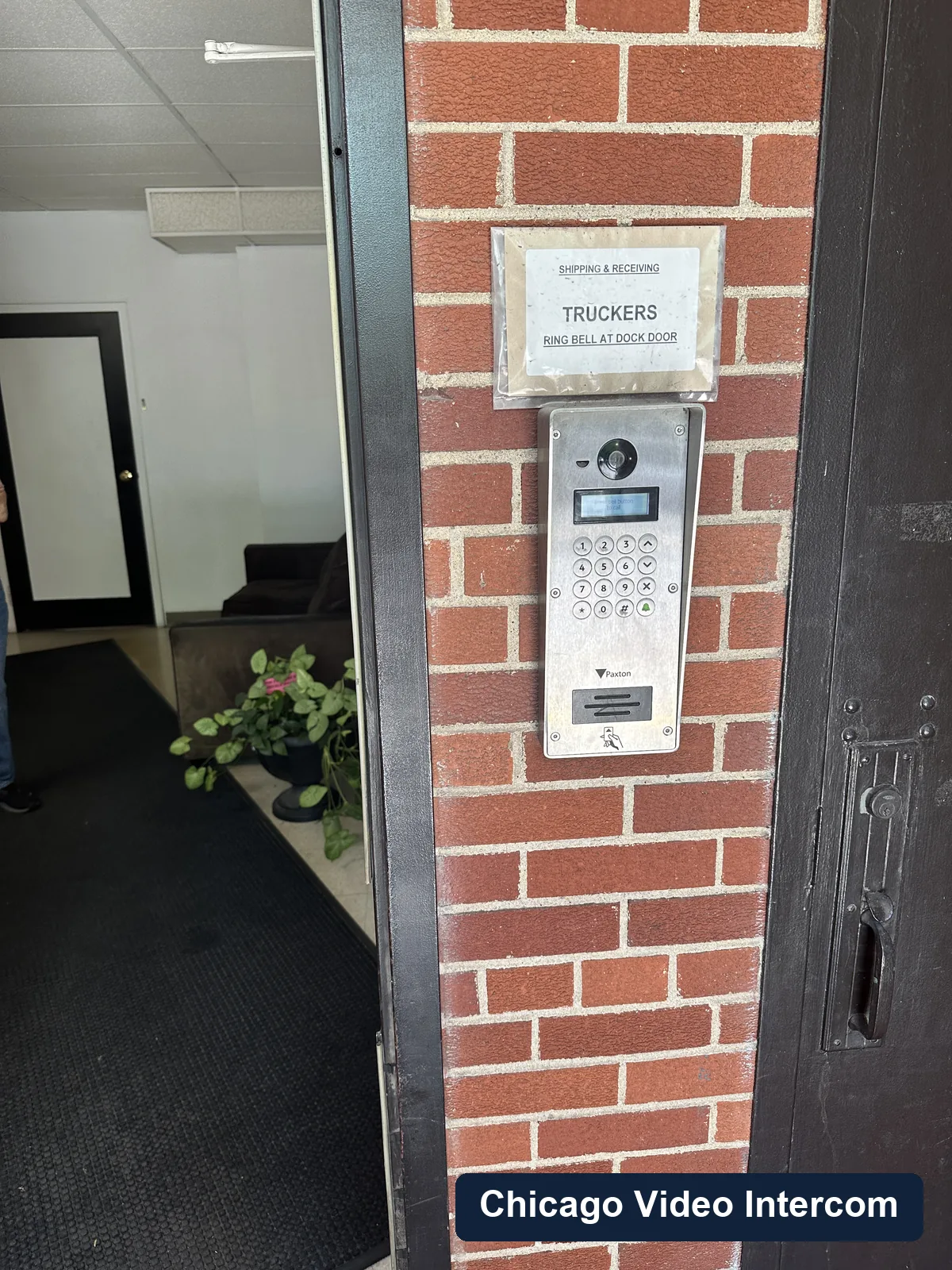
Field photos for smartphone video intercom systems
These are real entry panels, wiring areas, gate entries, lobby panels, and service conditions from the kind of Chicago buildings this page is about.
Areas served
Chicago service area
Service covers Chicago neighborhoods including Lincoln Park, Lakeview, River North, Wicker Park, and West Loop, with nearby suburban work in Evanston, Skokie, Winnetka, Wilmette, and Northbrook.
FAQ
Questions about smartphone video intercom systems
Can residents unlock the door from a phone?
Yes, when the system supports remote release and the door hardware is wired and configured correctly.
Do smartphone intercoms need indoor monitors?
Not necessarily. Many app-based systems are chosen specifically to avoid adding indoor stations.
What happens when a resident moves out?
The manager should be able to remove or update that user in the system, depending on the platform.
Talk through smartphone video intercom systems
Share the building type, neighborhood, number of units or users, entry points, and what is happening with the current system.